
So… Hi everyone. It’s been a hot minute. More like a hot couple of months. Hopefully this post is one of many more to come in the future. I’ve been dealing with a bit of writer’s block combined with a lack of time and drive to really make posts. It’s really hard for me to do things when I’m not 100% committed, as I feel putting out a rushed or heartless product not only reflects poorly on me, but is insulting to any readers I may have (read as: no one besides my dad).
Real time image of me writing this post at 2AM.
Speaking of DadKro, he’s the reason I’m writing this today. He has been pestering me to write a new post for a while now. For some reason, he really wants me to continue this blog. His persuasive technique this time was to give me a bunch of topics, which I’d choose one, and then write about it by a deadline (which I promptly missed… multiple times). So here is the one that really stuck out to me. I hope you enjoy.
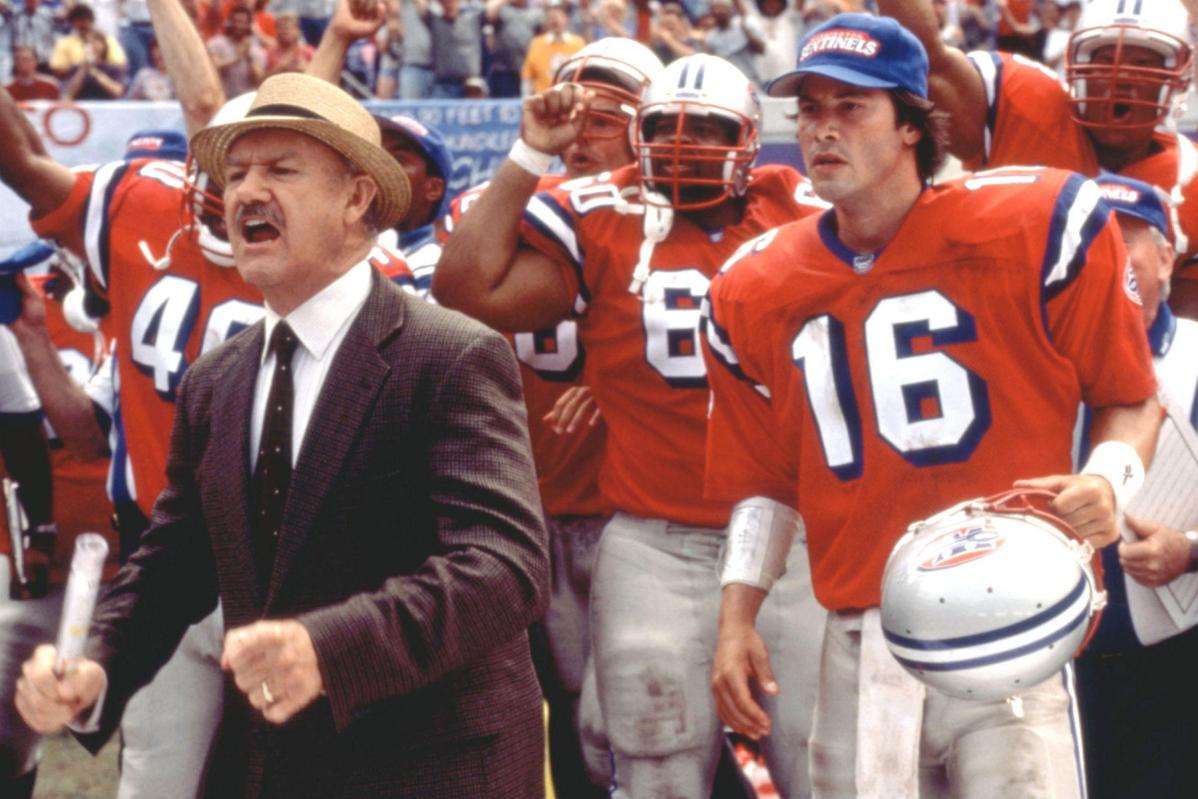
The Replacements is a sports-comedy movie that many have either forgotten or never even knew existed in the first place. It actually had some big name actors, with Keanu Reeves playing the main character and quarterback Shane Falco and Gene Hackman playing Coach Jimmy McGinty. The reviews are about what you’d expect for a movie from 2000 that you’ve never heard of. They’re average to below-average. The critical consensus on Rotten Tomatoes is “The cliched characters and obvious outcome make all the fun and excitement amount to nothing.” It is dumb and goofy, the ending is exactly what you’d think, and the romance feels tacked on and unnecessary.
I’ve watched it 100 times.

What a lovable group of players.
Because television allowed me to.
Let me explain what the actual point of this entire post is. This isn’t for me to wax poetic about how The Replacements is actually a great movie and you need to watch it and add it to your sports-comedy pantheon of favorites. This is actually going to be discussing movies that television will play repetitively and why.
For those that have cut the cable (which sounds really weird to someone who has never even considered it) and have forgotten about this phenomenon, let me try to explain. There are channels that you can get with most expanded cable packages that do nothing but play movies the entire time. When you’re a bored kid who is constantly flipping through channels, you start to see a bunch of movies that repeat throughout the day. You start to wonder if you’re going crazy or if it really is possible that Twister is somehow on every channel every few hours (this isn’t a hypothetical, this is legitimately why I hate Twister).
The truth of the matter is that some television channels do repeat movies all the time. Whether it’s because of licensing fees, availability, or other reasons, movies like The Replacements have found a second life on television being shown ad nauseam. If it wasn’t readily apparent, one of the reasons I even know this movie exists and have watched it so many times is because of it being shown on movie channels all the time. Even to this day, I still manage to find it on TV more than half the time (in case anyone was wondering, The Waterboy and What About Bob? were more movies that I learned about this way). The real question is why. For the general public, why are movies like this shown all the time? For me, why is this one of the movies I always feel safe going to. These two questions are indeed intertwined and my readers will find both will be answered through this analysis. Though the questions will be answered for more movies than just The Replacements, I’m going to use it as reference since it is one of the movies I am most familiar with. Plus, maybe I’ll make at least one person watch this dumb football movie that I like.
Why Do Television Channels Play the Same Movie?
So the first question that I aim to answer with this post is just WHY these movies are always on TV. We’ll take a little look into the process and what it takes to put these movies on television. Why are most of the movies on TV from a similar time period? Why are they (for the most part) of a similar quality/review score? In my experience at least, most of these movies are generally ones that are considered average to below average and usually didn’t do too well in the box office.
From the articles I’ve read, we can infer that the standard life cycle of most movies is going to theaters, getting released on home media, playing on premium channels (such as Starz and Showtime), and then finally making their way on basic cable.1 This would explain why a lot of the movies are generally from the 1980s and the 1990s. By that point, they are long past all of the stages of their life cycle, so the ability to get these movies is easier and the cost is much lower. Movies from around 2000 onward are in a different category and usually carry higher costs and more restrictions. That doesn’t mean they won’t be on though, channels like FX are constantly getting the rights to movies as soon as they can, but the standard cable channels usually rely on classics that’ll get eyes to the screen.
As I was reading, I happened upon an article that described the process in detail. A man named Hamish Turner, who works as Channel 9’s Head of Acquisitions in Australia, referred to the movies that they put on TV as “evergreens.” “You can play them anywhere at any time and they always deliver you a strong number.”2 Most television channels will have distribution deals with specific movie studios and the movies that are screened are usually involved in bulk deals that come with the rights. The cost can then vary based on many factors such as how long they want the rights for, how many times the movie itself will actually be screened, and how successful the movie is. That’s right, movies can also cost more based on how successful they were at the box office. So that brings up two major reasons why some movies are chosen over others; their age and their success level in the box office.
Channels also know their audience. We constantly see info about how certain shows perform at time slots compared to others, and sometimes there’s even info based on how it did within certain demographics. You might have even filled out one of these surveys! They’re known as the Nielsen Ratings and they affect many things from when shows are played on TV right down to how much channels can charge for commercials that occur during certain programs compared to others.
To go on a side tangent, Nielsen Ratings are measured through the use of Nielsen Families, which are households that have decided to participate in the survey. Whatever they watch on TV, what times, and what channels will be registered and will then be put together to create what is known as the Nielsen Rating. Ratings work in terms of percentages, so a score of 10 means that 10% of the “Families” participating watched this program while the other 90 didn’t.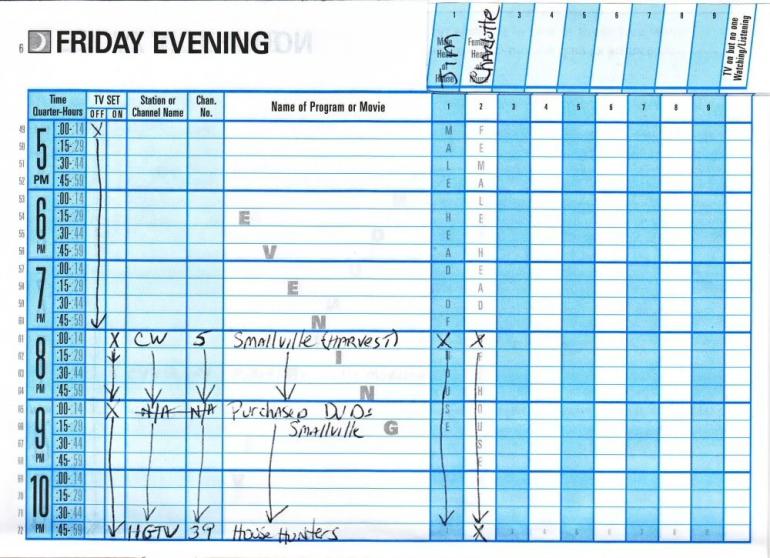
Here’s an actual look at a viewing diary. This person needs to watch less Smallville.
I put “Families” in quotes because it could be a single person household, but the system likes to use families because it’ll usually cover much wider demographics and lead to more detailed results.3
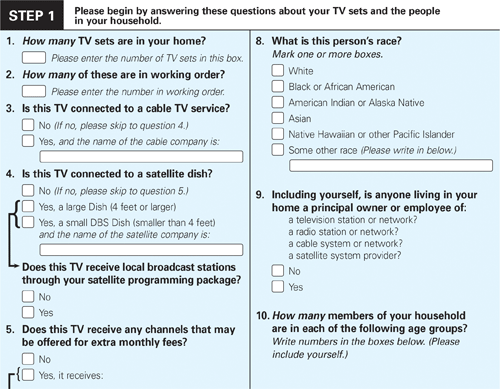
I have 5 television sets in my house. Weird flex, I know.
Back to the movies, how does this affect which movies are shown? Well, along with cost, it’s also important to know just what kind of movies will perform well with what audiences. While there is no science to it, it is possible to infer which demographics will like which movies. There are a bunch of factors that go into why certain demographics will like a movie, such as their ratings (G, PG, PG-13, R, etc.), the genre, and many other factors, which leads us to our next question…
Which Movies Are Most Popular?
So in the last section we talked about why certain movies are chosen and the process involving the rights. But just which movies are chosen? What are some of the most popular ones that are on television networks? How do the factors of what kind of movie it is affect it?
As I mentioned at the end, ratings do play a certain role in which movies are played. Contrary to what some may know or believe, R-rated movies do not do as well in the box office compared to their other rated counterparts. In fact, the highest grossing R-rated film in the USA (The Passion of the Christ) grossed around $370.8M. That’s barely even 40% of the highest grossing film ever in the USA (Star Wars: The Force Awakens) which grossed around $936.7M.4 This may sound like a “no duh” moment, but R-rated films have much more mature content and language. They also carry the ruling that NO ONE under 17 are able to attend unless they are chaperoned by a parent or guardian over the age of 21.
But what does that matter with television?
If you’ve ever watched a movie on a non-subscription channel (HBO, Showtime, etc.) you’ve probably noticed that a lot of these movies are edited for content. For some movies, this either completely changes certain lines of dialogue or removes certain scenes that are either too gruesome or too suspenseful for most television audiences to be able to handle. For some movies, like most comedies, this just involves completely blanking out audio (or changing lines to less offensive variants) and maybe censoring certain scenes involving sex or gross bodily functions.
But for some movies, it just won’t work out at certain times. Some movies are just too violent to be able to play at certain points of the day. Some movies just can’t be edited or else they risk losing most of their influential scenes. Censorship can lead to a point where the movie is just a shell of what it was.
My disappointment is immeasurable and my day is ruined.
So which movies get played the most on television? From lists I’ve found based on studies of this concept, most movies that are shown on television are made from around the late 80s to the very early 2000s. Most of them just so happen to be comedies. A lot of them were commercially distributed by Fox. Most were in the PG-13 rating range. They also seemed to have average to above average audience and critic receptions.
There’s quite a lot of outliers to these, but those seems to be the general rules of which movie seems to do the best on television. All of the ones that were played the most also seemed to be relatively popular movies, except for a few. Depending on what channel and how often the movie was played at certain times, the general consensus on the quality of the movie may fluctuate at points. Movies like Mrs. Doubtfire, which is one of the most popular movies on television, would be one of the “perfect” movies based on these guidelines. It also just so happens to have a relatively positive rating among both critics and audiences (71% and 77% approval on Rotten Tomatoes respectively). Movies that fall outside of the range that are also popular television movies are ones like Shawshank Redemption. This is a movie that was rated R, is a drama, and was received very well (91% critics and 98% audiences). It was not played on television near as much as Mrs. Doubtfire (probably due to costs and time slots being limited based on the rating), but it was still a very popular one.
So many great Robin Williams movies, and people choose to watch this one… sigh
So now that we’ve established how and why some movies are played on television multiple times, let’s finish this off by me talking about some of the movies that I’ve discovered from television and how they measure up based on these “guidelines” I’ve created.
I just wanted to mention There’s Something About Mary is a popular one, and it deserves every single view it gets.
How Do My Movies Compare?
I’m going to finish this blog post off by listing 3 movies that I have watched multiple times due to television and if they hold up based on these “guidelines” that I’ve made in the last section. As a reminder, here are the guidelines:
- Made between late 80s to early 2000s
- Comedy
- PG-13
- Distributed by Fox
- Average to slightly above average critical reception
TWISTER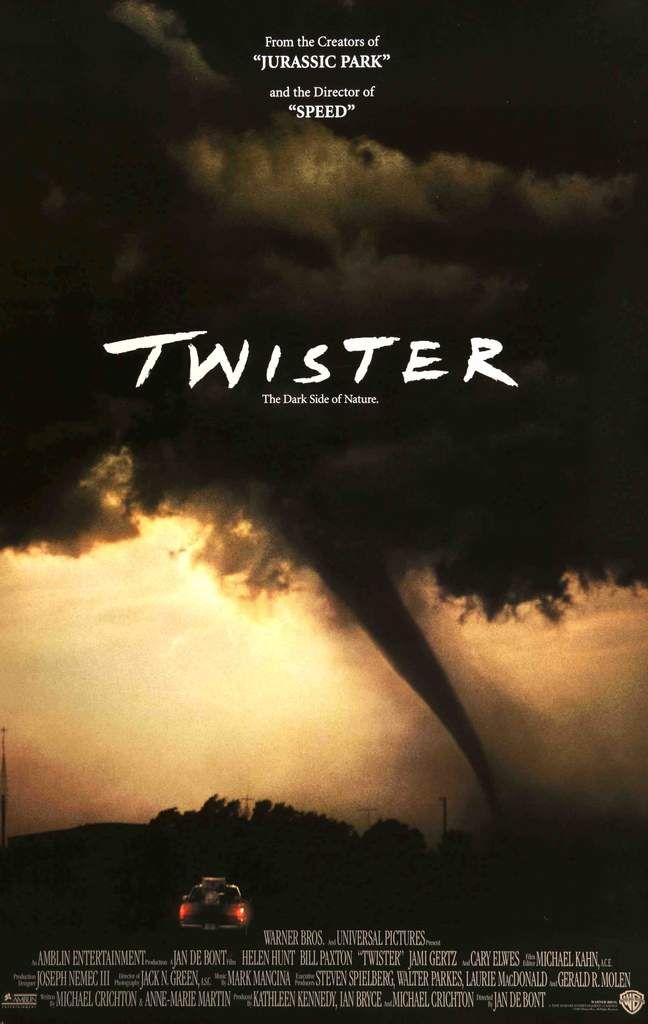
The face of evil.
I really don’t like this movie. I feel like I was never really predisposed to like Twister, but at first I didn’t really mind it. But then seeing it over and over again on television (plus my dad putting it on just to torture me while we were channel surfing together) really put me off to the whole thing. But how does it rank up compared to my guidelines?
Twister was released in 1996, which puts it firmly within the timeline. However, it is a drama, but that isn’t really too big of a difference. Comedy had the slight edge in the original research, but dramas didn’t follow too far behind. It is actually rated PG-13, but the distribution was done by Warner Bros., which once again isn’t too big of a difference compared to Fox. Both are extremely major distributors in the States. This movie received a 57% for critics and 58% audience, so it would be considered average at best.
But it actually sucks. Sorry.
WHAT ABOUT BOB?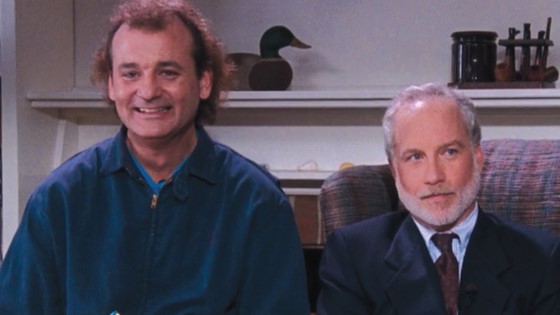
How could you not trust a man with a smile like that?
This is actually one of my favorite Bill Murray movies that no one knows about. To give a quick synopsis, it’s about a character named Bob who follows his therapist on vacation when he starts to feel separation anxiety over his therapist leaving for vacation. His therapist’s family starts to fall in love with Bob, much to the distress of the person he followed.
But enough about Bob.
What About Bob? was released in 1991, which also puts it firmly within the timeline. It is indeed a comedy (a very funny one at that), but it’s rated PG. Once again, this is a very safe rating for television and doesn’t really put it at odds with being too childish for most adult audiences to feel comfortable watching or being too mature for younger audiences to even be allowed to watch. The one thing that differentiates it was that it was distributed by Buena Vista, which is not one of the bigger names that was found in my research. The film has an 83% for critics and 79% audience approval, which I would say puts it in a much higher echelon than most of the films that appeared on “most on television.” This might explain how I saw it a lot for a certain period of time but then not much afterwards. It might have cost just a little bit too much to consistently have the rights to it, especially when it is a lesser known Bill Murray movie and films like Ghostbusters are more widely known and available.
THE REPLACEMENTS
SO YOU’RE BACK, FROM OUTER SPACE! Listen to the Cake cover version, it’s really good.
Finally, we get back to the movie that started it all with me. I can’t describe to you how much I’ve watched and found some sort of enjoyment from this movie.
The Replacements was released in 2000, which puts it at the end of the timeline that I’ve created. It’s a sport movie, but it has a large focus on comedy so I’d say it fits within that perspective as well. It was rated PG-13, but once again was distributed by Warner Bros. The approval rating is 41% and 66% for critics and audiences respectively, so it actually falls on the lower end of that guideline.
But Why Do YOU Keep Watching These Movies?
The Atlantic did a really good article based on why people watch the same movies all the time when they are on television, regardless of how many times they had seen it before. To put it simply, the reasons they listed were “The Simple Reason,” “The Nostalgic Reason,” “The Therapeutic Reason,” and “The Existential Reason.”5 I’ll have it listed in the sources at the bottom if you’re interested in looking into it more on your own.
For me, it just feels comfortable. We’ve all been bored out of our minds and just looking around on our choice of media. Whether it is Netflix, television, YouTube, what have you. Most of time times when we are bored and just looking to relax, most of us aren’t looking to find anything too new or exciting. We just want to veg and watch something familiar that we know will make us feel a certain way. It’s the same reason why many people watch Friends, The Office, or (in a weird thing only my coworker does) The Gilmore Girls. It’s the same reason why, when I’m going to sleep, I watch the same YouTube channels and videos that I know I like and I know I can relax and watch, but not at full capacity. If I’m watching something new, I don’t know how engaging it’ll be. I don’t know if it’ll suddenly make me feel anxious. I love having new experiences, but I don’t always want them at certain points.
The same thing happens with these movies. Sometimes I just want some background noise while I’m doing work (I literally have the Game Show Network on about 75% of the time that I’m writing these posts).
Sometimes I just want something to watch while I’m tired that’ll relax me and make me able to go to sleep when I’ve had a really anxious day. Movies like The Replacements are really memorable to me because they’ve provided me comfort in those moments. I know they aren’t the perfect movie or even really one of my favorites, but it’s something that I’m familiar with. I like to describe things like these as “comfort food” but maybe these are more like “fast food.” They might not be the best for you, but they get the job done, and sometimes you just crave them.
The Replacements is less of a Big Mac and more of a McDouble.
For some reason, whenever I’m channel surfing and there’s not something immediately important to me that I want to watch, if I see The Replacements, then you can bet your ass that I’ll be watching it.
What’s your comfort movie, YouTube video, television series, or whatever? I’d love to see some of your responses!
I hope that was exciting for my readers today. Unlike my post about Demolition Man, this wasn’t directly about the movie, but more about the concept of why some dumb sports comedy was so important and impactful to my life. If this was kind of boring, I’m sorry, but this is something that I’ve always wondered about so it was a fun bit of investigation for me. Plus, you can blame DadKro since he gave me the idea. But all in all, I hope this post was able to teach my readers something new and give them some insight into another aspect of film that I enjoy. The blog is called “Filmvestigate” after all!
I’m the Sherlock Holmes of useless media stuff.
Look forward to the next one, where I might either do my first video game post or a post about game shows!
You’ve probably noticed little superscripts throughout the post. Those are for the Sources below. I know it’s not necessary for blogs, but the academic side of me feels it is needed. Plus, it can be nice to read if you want to look further into some points I touched upon.
As always, if you have any comments, questions or concerns, feel free to use the Contact link and I’ll get back to you about it. Or you can leave a comment! I appreciate all the readers who have stuck with this list and I hope that my content is good enough for you to maybe drop a subscription. Either way, this was very good for me to get my thoughts out and I hope you enjoyed the ride nearly as much as I enjoyed putting you on it. From one fan to another (or a prospective new fan). This is for you.
~Jer
Use the "CONTACT" tab to send comments you'd rather keep private or
suggestions that you'd have for future topics. I can't promise I'll
go for everything, but I'll always give it a fair shake.
Sources
- https://www.fool.com/investing/general/2014/05/03/why-the-same-handful-of-movies-are-always-on-cable.aspx
- https://www.news.com.au/entertainment/tv/channel-9s-hamish-turner-reveals-how-a-movie-is-picked-to-play-on-tv-and-how-much-it-costs-to-do-so/news-story/2cda978843293158a92ad4d6a9f9f218
- https://beonair.com/nielsen-ratings-explained/
- https://www.boxofficemojo.com/alltime/domestic/mpaa.htm?page=PG-13&p=.htm
- https://www.theatlantic.com/entertainment/archive/2014/09/rewinding-rewatching-and-listening-on-repeat-why-we-love-re-consuming-entertainment/379862/
 Filmvestigate