
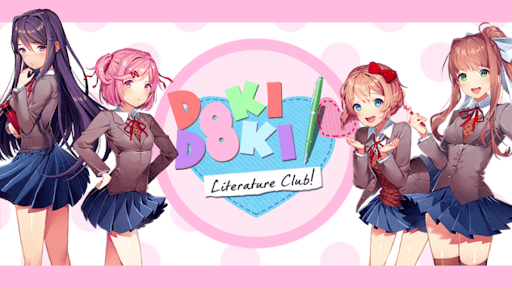
Today is officially June 30th, which means that the expansion that we never expected to the game that surprised us all is finally out! Of course, I am talking about the release of….
Ys IX: Monstrum Nox
But for real though, who would have thought that we would have ever gotten a sequel/expansion/literally ANYTHING else to Doki Doki Literature Club? I feel like that has been the general trend with this game throughout its creation all the way to release. Just what the hell did you expect from it, and how far off were you from what actually happened? It’s one of the games that truly surprised everyone and one that I still HIGHLY recommend even if the terms anime, visual novels, or dating sims are like speaking French to you.
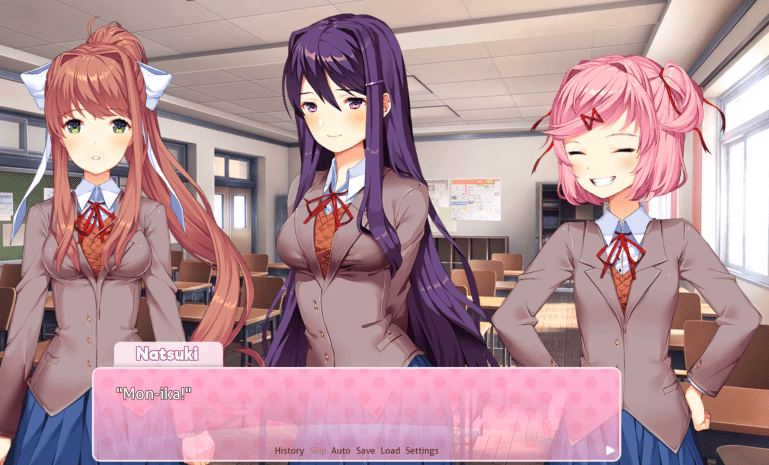
Or Japanese I guess…
It’s a little hard to get all of my thoughts on this experience in order because it feels like it was such a fever trip and one that I cannot believe was actually real. If all of this is making me sound, well, insane, then you’re understanding just the kind of effect DDLC has on someone. It took my attention and my breath away in a way that very little pieces of media did before.
If you think I’m being cryptic and it’s getting kind of annoying, then I understand. I do however, want to put specific emphasis on content in this post before I really get into the heart of the matter.
Spoiler Warnings for the following games:
- Doki Doki Literature Club
- Metal Gear Solid
- Metal Gear Solid 2: Sons of Liberty
- OneShot
- Undertale
Content Warnings for the following subjects:
- Depression
- Suicide
- Body Horror
- Fourth-Wall Horror
Some people get all bent out of shape when you put content warnings, but for this game it is absolutely necessary. Not only for the comfort of my readers, but also for the integrity of the game and the plot itself. This is absolutely NOT for anyone who has not played DDLC yet. Even if you think you have been spoiled for the game, you really haven’t yet.
On that note, let’s dive into the aspects of fear and immersion in this cute little dating sim known as Doki Doki Literature Club
Fear

If you’re playing the game for this reason, I got bad news for ya
You’re not gonna find much more depravity in the gaming sphere than when you reach dating sims and the visual novels associated with them. Perhaps I’m letting some annoyance seep into that first statement, but we’ll talk a little bit more about why later. When playing DDLC for the first couple hours or so, this is exactly the type of game you are going to get. A game with wonderful art, bright colors, and catchy music. The girls are cute, the poems are well-written, and they all are insanely in love with YOU for some reason.
Let’s talk about YOU later though.
This game is fine in this part. It’s cute, it’s relatively entertaining. If you want some self-insert fantasy, then the MC that you take the role of is about as cardboard and cookie cutter as it gets, so no need to overthink everything. The structural integrity of the game is held together by its poem creation, which allows you to go down the path of which romance option you’d like without specifically selecting which romance you’d like. As far as a structure, it’s pretty solid.
Until it snaps.
When Sayori tells you about her depression and you are given a chance to either become her boyfriend or reject her feelings, it feels like the traditional hero fantasy trope that so many romantic movies/games/books/whatever fall into. The way the rest of the game plays out, with how you learn about how each girl has their own problems they need to work on, it feels like the power of love is going to help you to save your childhood friend from her debilitating depression. Your embrace and your kind words are going to be the one thing to save…

oh.
“An exception has occurred.”
Suicide is an incredibly touchy subject for absolutely every good reason you can think of. It’s scary to think about, it’s scary to look at, and it’s scary to experience.
So Team Salvato decides to pull the rug out from under you and make you stare right in the face of your hero complex.
Let me be absolutely clear with you, this game is triggering and downright terrifying. I do not hold ANYTHING against anyone who did not think they could keep going after a scene as jarring as this one. It took me a few minutes to recover not just from the jump scare, but being confronted with the results of dark thoughts that unfortunately can happen in real life. I’ve lost important people to suicide, and I still think about them. Maybe that’s why Sayori’s death hits a little bit close to home.
From there, what is known as “Act II” begins in the game. It seems just about as normal as always but something is… different. Sayori is missing, sure. But stuff just seems odd. Those poems aren’t as cute anymore. Those moments spent with Yuri and Natsuki aren’t as loving as you remember.
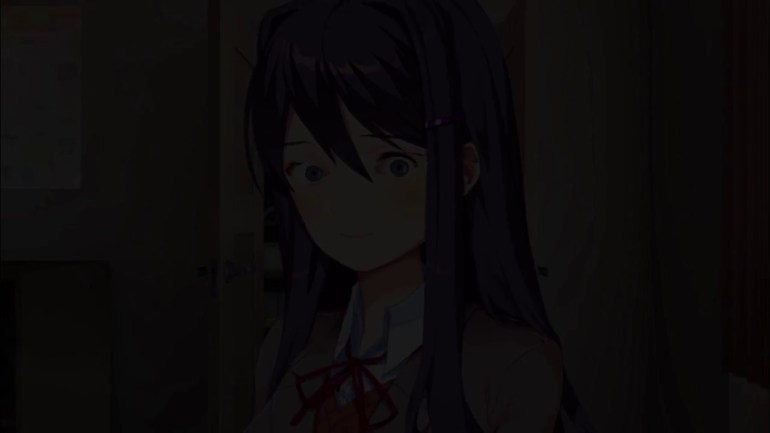
Stop staring at me with them big ol’ eyes.
At first, it starts really small. Screens don’t transition as smoothly as they once did. The screen is slowly tilting and making you feel like you’re going to fall off.
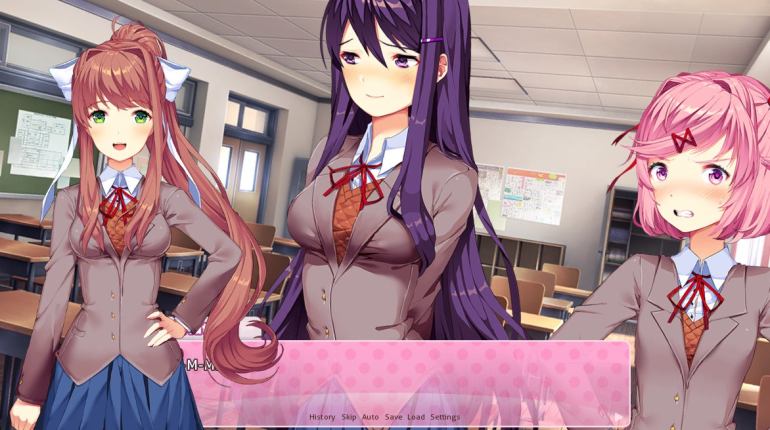
I feel like I’m going to slide off.
The characters who were sweet and bickered like siblings suddenly have more venom. Natsuki and Yuri aren’t playfully ribbing each other or getting into some schoolyard fight. It’s personal.
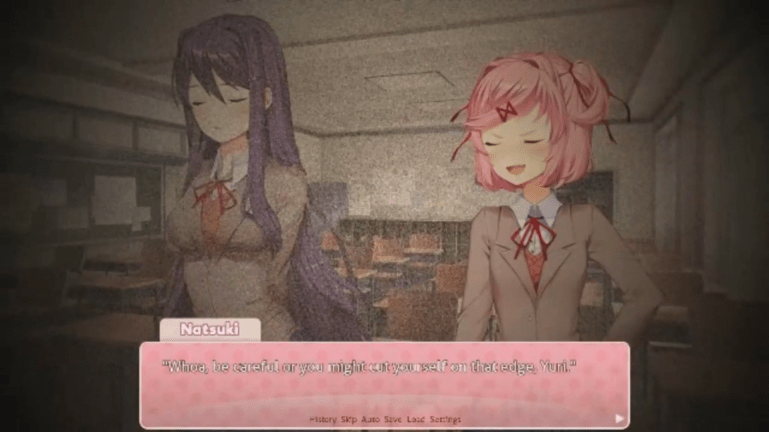
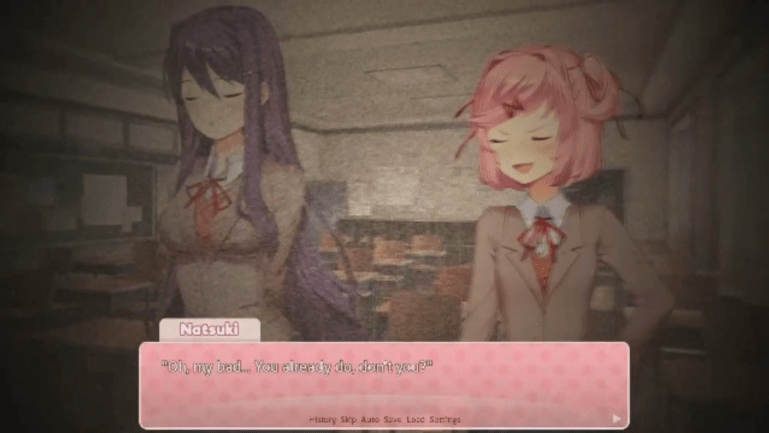
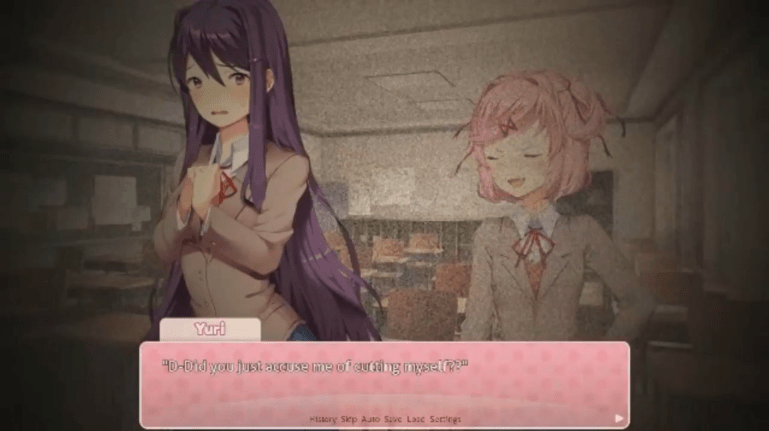
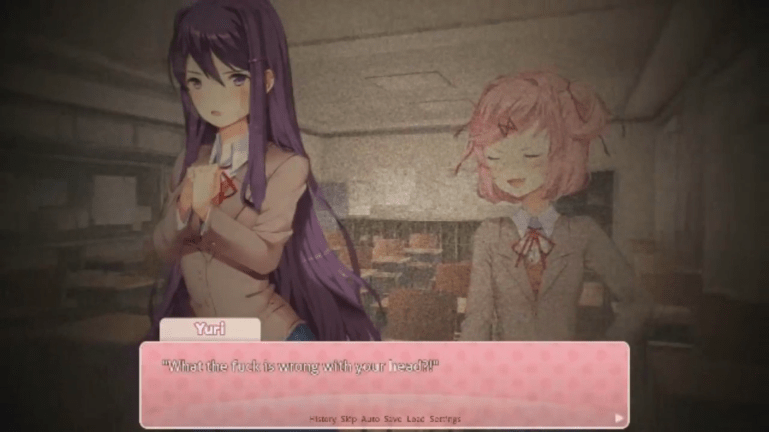
What is wrong with both of their heads?
The immersion is affected because it distorts the reality that YOU experience with the girls. They don’t seem to even notice anything wrong, but YOU sure as hell do. It’s all of these small things that start to make you wonder just what the in the world is going on. No one in the world is going to tell you, especially not Monika.
The game isn’t a dating sim anymore. Hell, at later points, it’s barely even a visual novel anymore. Natsuki is terrified of the world around her instead of being a tsundere-baka chan (or whatever the anime kids are saying these days). Yuri suddenly isn’t shy and afraid of love, she’s obsessed with YOU and wants to be with YOU.
Let’s talk about YOU later though.
After a couple hours of this…
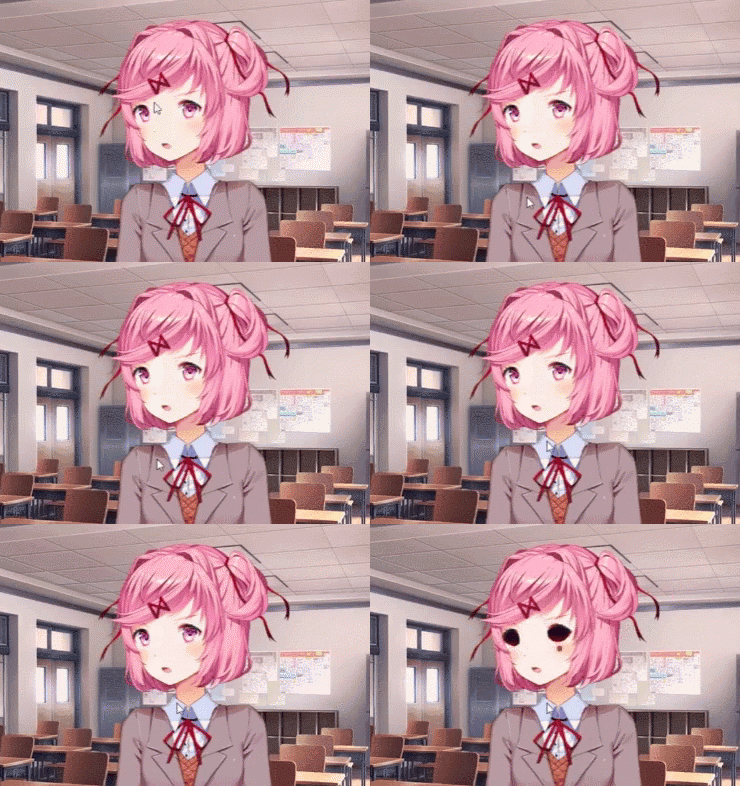
Pop.
…and this…
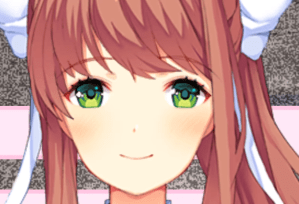
Nothing is wrong, go back to sleep.
…or even this.
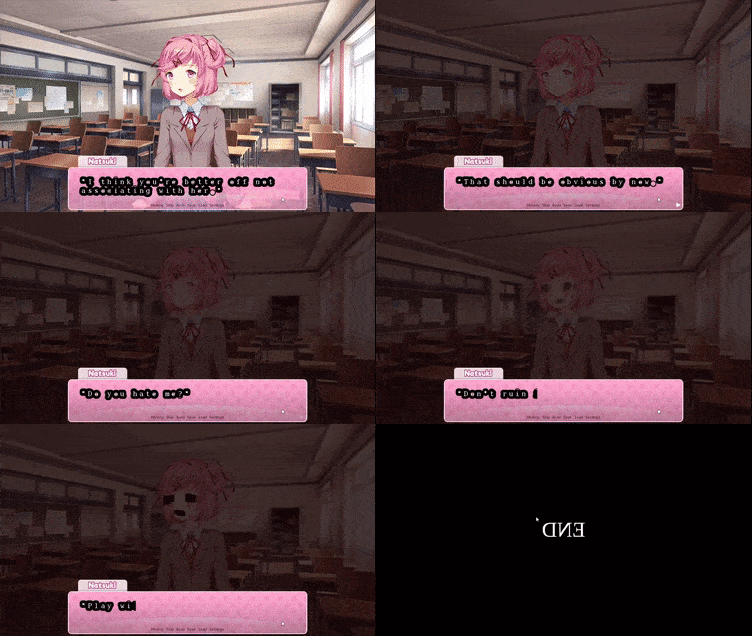
I think a chiropractor could fix that right up.
The game is trying to psychologically break you of every single expectation you have, and it really works. When Dan Salvato made this game, I think everyone was pretty surprised it was a cutesy dating sim, but they all ran with it. Then the illusion is broken right in front of you and suddenly? Nothing makes sense. Is this a bad ending? Dating sims have long been known for some of their, let’s call it, creative bad endings. In the most extreme cases, you die. Not giving anything specific, but I’m sure there’s a few that might come to your mind.
Everything is climaxed at the end of Act II, when Yuri tells you how she really feels.
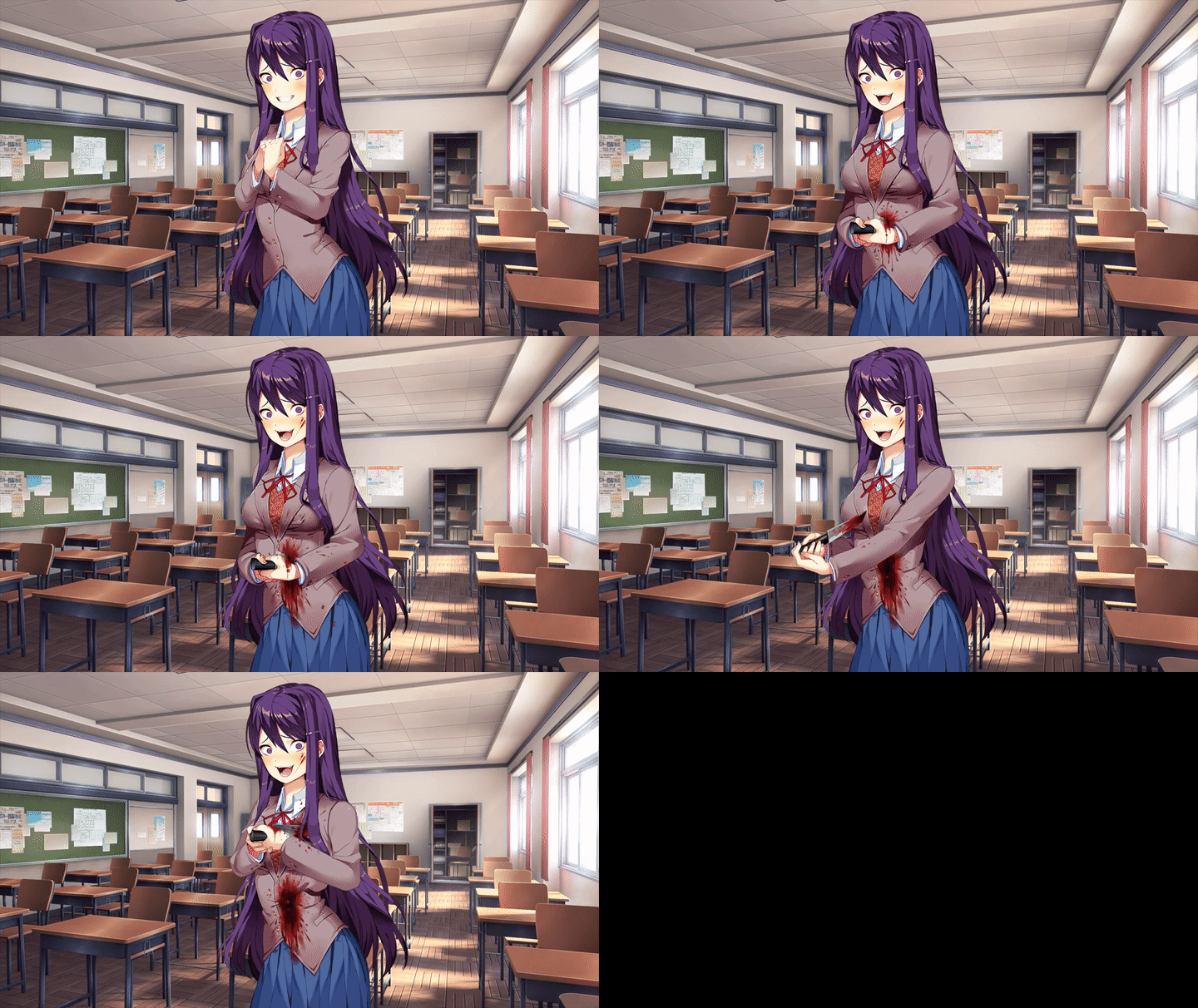
I don’t even have a joke for this. I was just in shock.
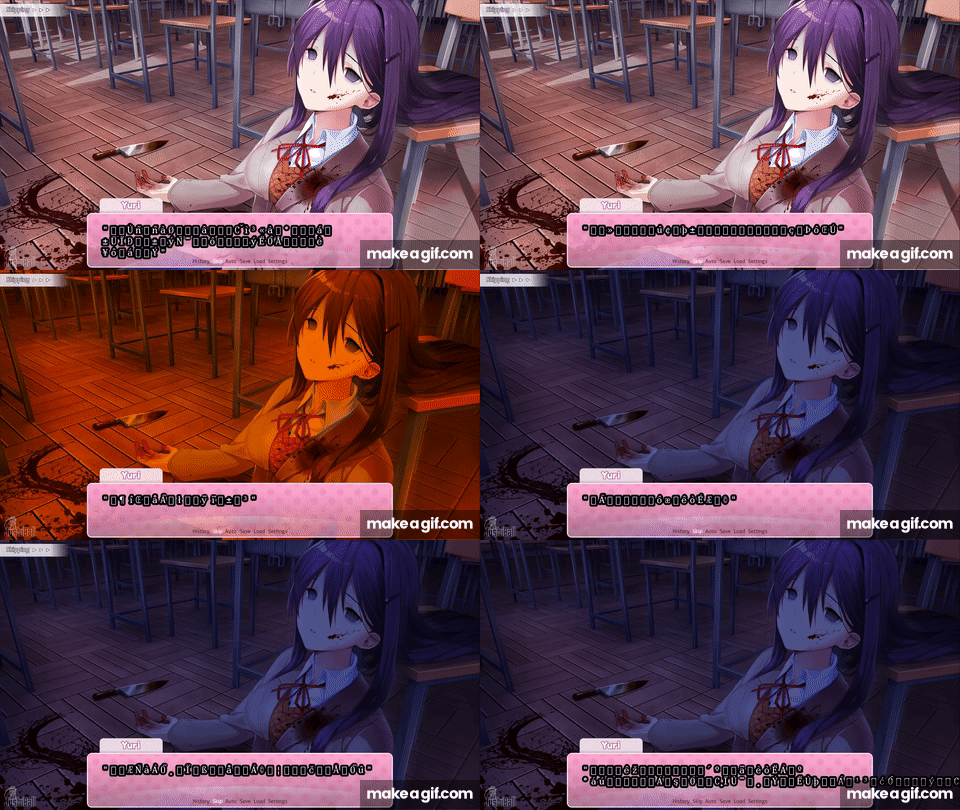
This scene lasts for exactly 1440 lines of dialogue.
So why are moments like these so shocking and terrifying? They’re not especially gory or realistic. The stabbing animation is like 3 total frames! How come that can take us by surprise, but people can blow a bleeping zombie’s head off in Resident Evil and feel nothing?
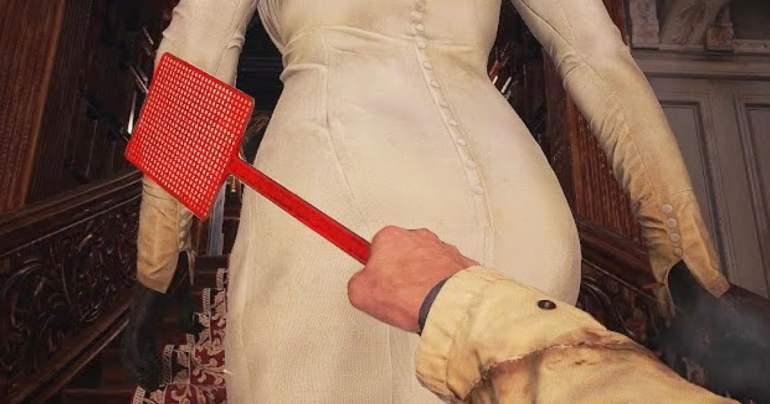
Or worse, be HORNY during it?
All of these moments are terrifying because you least expect it, sure. But there’s a bigger reason.
It’s staring at the pieces of the fourth wall falling to the floor in front of you.
Immersion and the Fourth Wall
You may have noticed I have been referring to YOU a lot in this post, especially when referring to the YOU experiencing the game. This isn’t just for some dramatic effect (though I will admit I have been tastefully enjoying hitting ctrl-B this often), it is to make a point.
This game is predicated on the fact that the MC is YOU. This is true immersion and fourth wall breaking at its finest, and it is essentially the crux of the appeal of DDLC and the foundation of its horror.
Let’s take a step back from DDLC from a minute to talk about two specific terms that are important here. Immersion and Fourth Wall.
Immersion in video games is pretty easy to explain. I already kind of explained it in my last post *cough cough* read here *cough cough*, but to sum it up, immersion is the sensation of feeling like you are actively participating in the game’s world.
Now, obviously, with games being an interactive medium, you are always going to feel like your actions affect the world. That is exactly what the point of playing a game really is, whether you’re just another face in the world of MMOs or you are the god of all creation when playing games like The Sims. However, with immersion it feels more like an actual insertion of yourself into the game. This doesn’t always mean that you’re creating your own character to represent you though. Immersion can be when you feel like you ARE Kratos in God of War, or you are that maniac drug dealer dude in GTAV (can you tell I haven’t played GTAV?).

This well adjusted individual.
Immersion is when you feel less like you are playing a game and more like you are actually in the game. With things like VR evolving this is getting a little bit murky, but that is the gist. Gamasutra actually has a really interesting article about immersion that gets more into the science of it that I recommend reading if you are nerdy like yours truly.
Immersion being important is why people complain about immersion breaking in games. Things like QTEs (especially when they have no consequence to the actual game) can really feel like they take control out of your hand and make you a passive participant.
This leads us into the idea of the fourth wall.
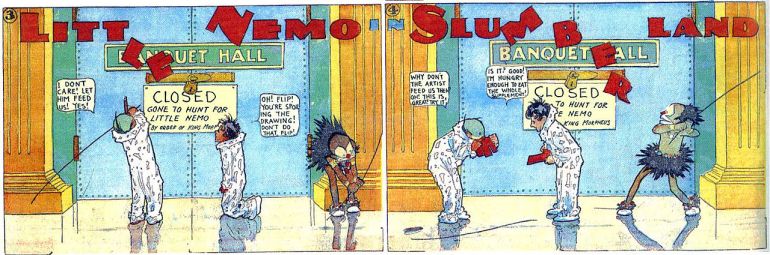
Oh Little Nemo, how I totally have read your whole collection.
“The fourth wall is a performance convention in which an invisible, imagined wall separates actors from the audience.”
The fourth wall is something that game creators have been increasingly interested in playing with, but the problem is doing it effectively. The true goal when breaking the fourth wall should be to also not break immersion.
Super Bunny Hop makes a really good point about this in his Critical Close Up of the original Metal Gear Solid. One of the most insane things about parts like the Psycho Mantis fight is that it completely breaks the fourth wall and reminds you that YOU are not Solid Snake. You are pretending and playing a game on a piece of plastic. The reason this doesn’t break immersion is because the characters and the world are in on it. They talk about codes on the back of the game case and “change the channel” on you and act like it is totally normal.
And yet, it doesn’t do what DDLC does.
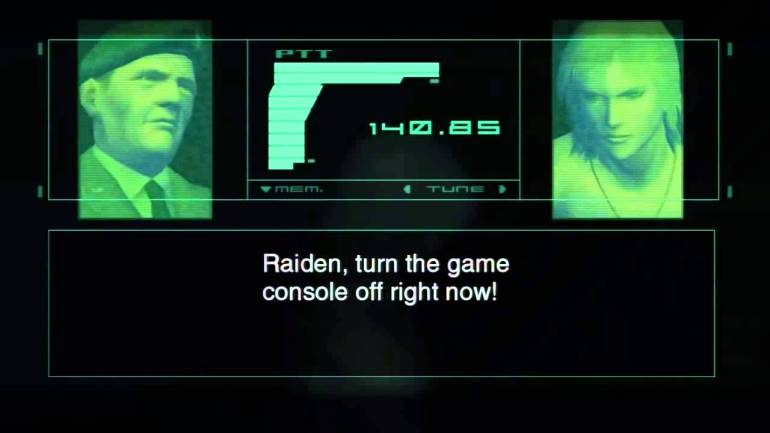
At the climax of Metal Gear Solid 2: Sons of Liberty, all hell breaks loose when the Colonel, who is not really the Colonel (you’ll figure it out later) has what appears to be an existential meltdown. It’s weird and unsettling, but not really until this moment.
No, I don’t think I will.
From there, everything starts to feel a lot more… direct. Near the end when the AIs are having their iconic (and surprisingly accurate) talk about controlling information and meme culture, suddenly Raiden stops talking. None of what they say really feels like it’s to Raiden.
They’re talking to YOU.
Another poignant moment is at the end of the game, when you have Raiden finally has served his purpose to you (the player) and the interactivity is over, he finds a dog tag that has the name and birthday that you put on it.
YA YEET.
He says he’s never heard the name before and tosses it away. After a game where Raiden has been manipulated and controlled from the very start, Raiden is tossing away the last thing that is controlling him.
YOU.
DDLC feels different though.
OneShot is an incredible little game about a little catboy being transported to another world in order to save it. He is carrying around the world’s sun (a lightbulb) and needs to save it. However, there’s another character.
YOU.
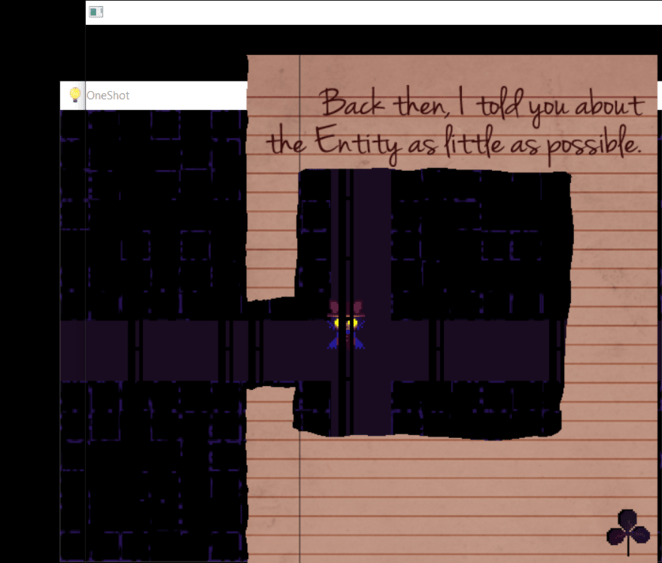
You are quite literally a recognized god of this world who Niko puts his complete trust in. Niko talks directly to you, and though you don’t always respond, it’s always your choice and the game knows it. There are plenty of fourth wall breaking moments that involve actually having to play with game files, but one of my favorites was having to move the screen to solve a puzzle.
Now you know which way to go!
Every decision is made by YOU and Niko and the other characters are aware of it.
Still not the feeling of DDLC, however.
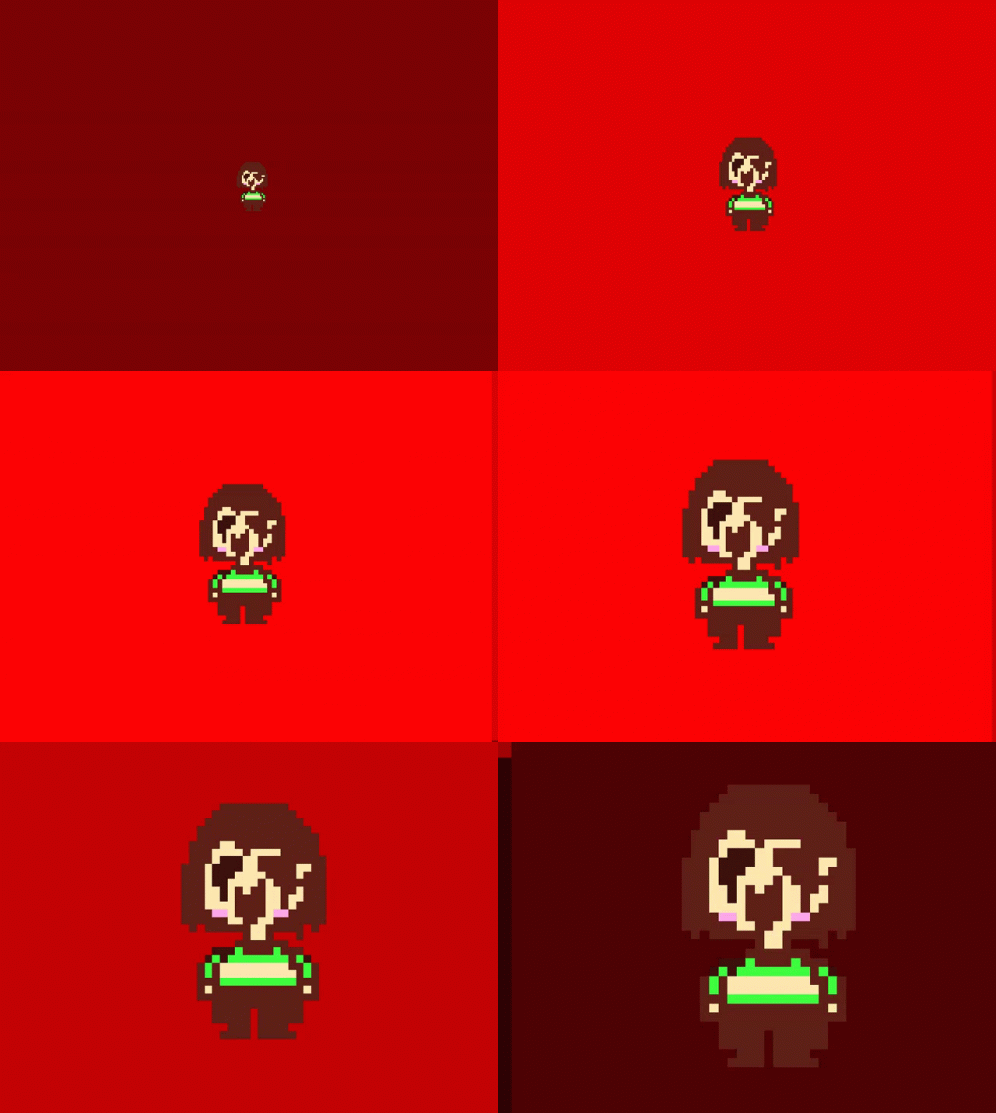
Undertale plays with the fourth wall by making the concept of a SAVE and reloading an attribute of the determination trait. There’s some creative ways that the game plays with you using your name as the file, but most of the fourth wall breaks aren’t really directed at YOU the player, but moreso at the concept of video games and gaming itself. It pokes fun at how you can constantly die and not make the same mistakes, but your character should not be aware of that function. There isn’t really a moment where it feels like the game even cares about YOU until Chara tells you how much of a bastard you are for killing everyone and then making you sit in the corner and think about what you’ve done.
Boo.
So Why Does DDLC Feel Different?
Thank you for indulging me with those moments. I know it’s a little bit of a detour, but I think it settles in for why I think that DDLC’s form of fourth wall breakage and immersion hits the player so hard. It all boils down to one idea for me.
Dating sims, as a whole, are supposed to be for self-inserts.
YOU are the one falling in love with the girls, but you have to deal with your stupid and bland protagonist getting in the way. You might even see the protagonist and it kind of reminds that you that you aren’t the one getting to date your waifu (feel gross typing that).
DDLC has MC (the name given by the community) who is the person that you take control over. He’s bland and reacts like any other anime character. What DDLC really does differently is it indulges you in that fantasy by not really giving you much about MC himself.

This is literally all you EVER see of him.
As DDLC slowly melts away the façade of the stand-in character, suddenly the game is finally about YOU. The girls, especially Monika, are starting to talk to YOU. Isn’t that what all the players wanted?
Well, not exactly.
The problem is that MC ceases to exist right when the infamous Act II is kicking it into high gear, crazy ass mode. I want to sum up my thoughts on why DDLC is so scary right now.
DDLC’s effect is amplified because it gives the player exactly what they want in exactly the way they do not want it.
What does that mean? As I said before, YOU, the dating sim player, almost certainly want the girls to love YOU, not the MC. So Team Salvato gives you exactly that. Except, suddenly, it’s obsessive. It’s obtrusive. It’s uncomfortable.
It is scary.
Suddenly, all the jump scares and unsettling moments aren’t happening to some character that you can detach from your own position. They are not meant for MC or anyone even in the universe of DDLC. They are meant specifically for YOU.
And everything changes in Act III.
Just. Monika.
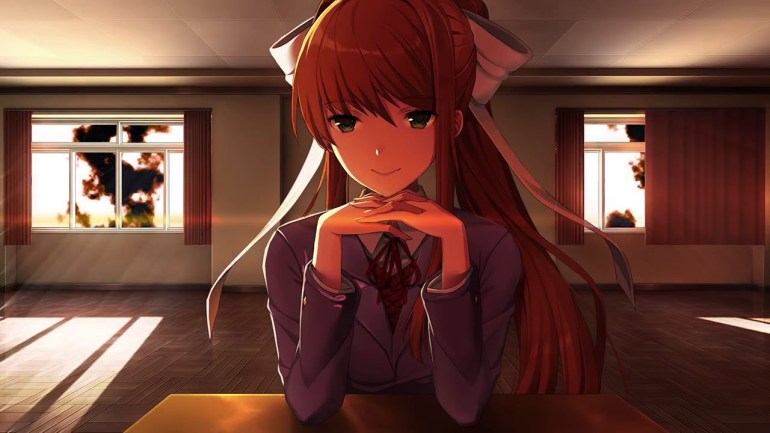
When Monika deletes the world and leaves it only to YOU and her, this is when people finally got the point. Monika was doing all of this to get YOU to love her, not that shell MC. She doesn’t care who YOU are, but she loves you. This moment in a liminal state with her can last for as long as you want it to.
Remember all those little moments of fourth wall breaking and immersion? That was not just the game trying to scare the crap out of YOU. It was Monika trying to make it so that she could finally have her romance, her route. All of the other girls essentially crumbled in front of YOU, so there should be no other choice than to just love Monika… right?
The mind break that occurs when the player recognizes that this was not some cheap transition into horror to scare them is just magnificent. It was Monika working outside of her programming and her original role in the game as moderator. The character who seemed to be on the sideline was actually the one with the puppet strings all along.

If Monika was somehow hotter.
Eventually, the game makes you do the dirty work yourself when you delete her .chr file.
Games like OneShot made you dig for files, so why does this feel different? To me, it’s because it is YOU who is doing it for YOU. Those files in OneShot are cool ways to solve puzzles and advance the story, but it isn’t the story about YOU. It’s about Neko and the world he is transported to. With DDLC and Monika, YOU are doing it to save yourself from this world that Monika has trapped you in.
The power in DDLC’s horror is how close to home it hits. It gives the player exactly the fantasy they want, but then uses those expectations and tropes to flip the player on their head and smash their expectations to dust in front of their face. A point of why it shocked everyone is because it was so unexpected in a game they already didn’t expect, but for me the main shocker was how it effectively used those tropes against the player.

Was there ever?
Conclusion
I don’t really know where to put this, but I HIGHLY recommend watching this video by Tech Rules if you’re interested in some of the programming tricks that go into the game’s effects.
I legit cannot wait to play Doki Doki Literature Club Plus. I’m writing this post the day before it is being published, so by the time you are reading this, the game should already be out and available to play.
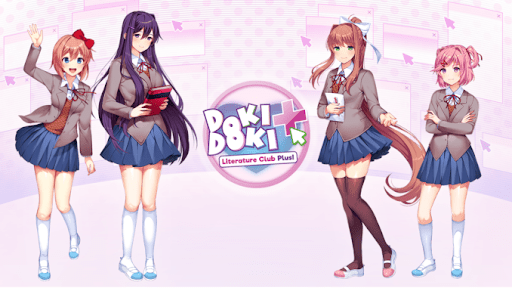
Look at all them pixels.
I don’t want to put my own personal experiences in here too much because I don’t want to color how anyone else might play it. However, I do want to say that this game had a huge impact on me and how I view tropes, story development, immersion, and games as a whole (as you can clearly see from this way too long post). After I played this game, the combination of fear, wonderment, and shock led me to stay up all night just reading everything I could about DDLC. To me, that is power.
DDLC is not fun.
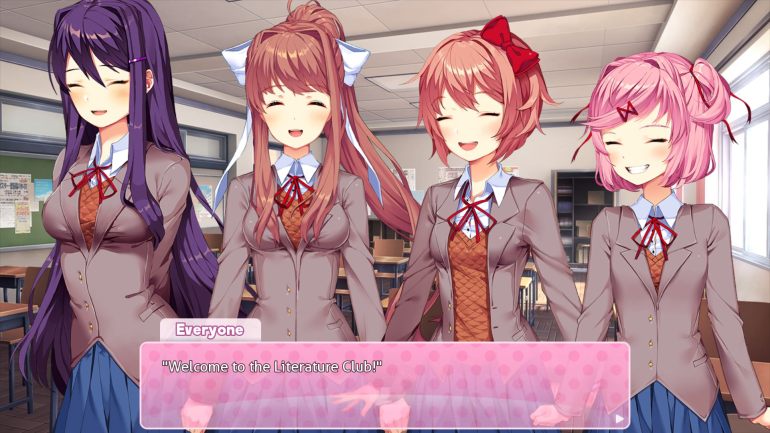
Pictured here: Not fun.
If you want to play games for fun, then I respect it, but this might not be for you. Even if you find horror fun, I think that just that aspect won’t give you what the game is all about.
I still HIGHLY recommend it.
It is an experience I won’t forget and even though I only played it once, it is still fresh as day in my head. I really cannot describe how much of an experience Act II/III are to me.
Maybe that’s why I’m kind of upset about the waifu culture that came from the game. I’m probably just being a stickler so I won’t spend much time on it, but I feel like it takes the whole message of the game and why the impact was so powerful and just throws it in the garbage.
I’ll admit, I’m a teensy bit apprehensive about the side stories. I trust Dan and the rest of Team Salvato to do it right, but I would be lying if I said I didn’t have a slight worry that it would just devolve into the standard visual novel/dating sim that I originally expected. I will certainly give it a fair shake and I do hope that the original arc will have some updates that will scare the pants off me again.
Am I wearing pants? Whatever.
Play the original Doki Doki Literature Club here.
Purchase the new Doki Doki Literature Club Plus! here.
Visit the official website for DDLC+ and find merch here.
As always, if you have any comments, questions or concerns, feel free to use the Contact link and I’ll get back to you about it. Or you can leave a comment! I appreciate all the readers who have stuck with this list and I hope that my content is good enough for you to maybe drop a subscription. Either way, this was very good for me to get my thoughts out and I hope you enjoyed the ride nearly as much as I enjoyed putting you on it. From one fan to another (or a prospective new fan). This is for you.
~Jer
 Filmvestigate